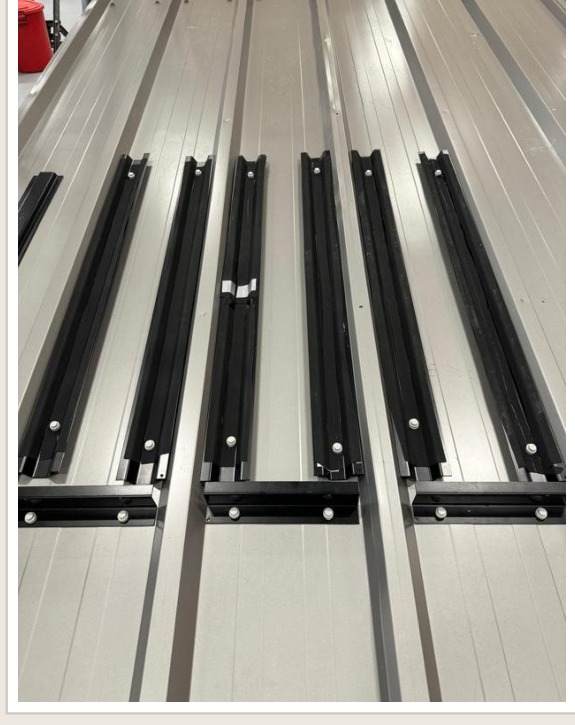
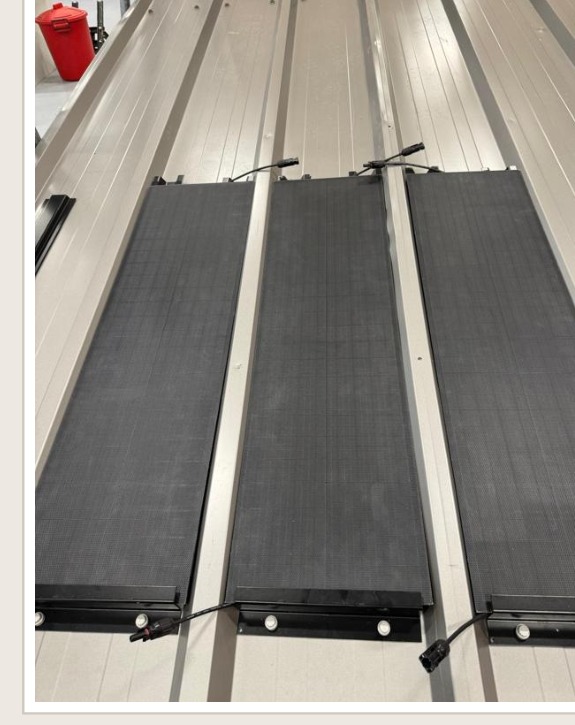
Photovoltaics no longer have to be equipment bolted onto a finished building. Roof- and wall-integrated collector systems let solar become part of the envelope itself — specified into the panel package, not added after the drawings are done.
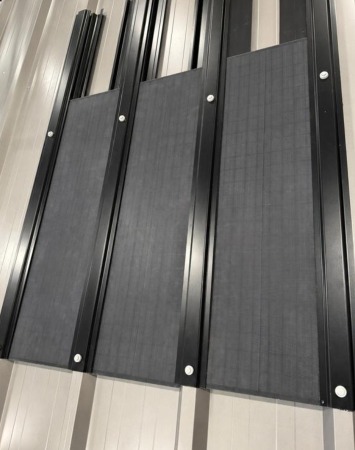
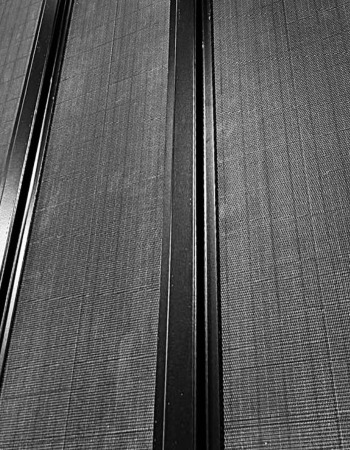
For most of solar's history, a photovoltaic array has been equipment: racked, tilted, and bolted on top of a finished roof after the architecture was already decided. Rib-mounted systems like the Voltaic Tycoon change that relationship — the collector becomes part of the panel system itself, uniform matte black and engineered to the same rib geometry your metal panel already runs on, so solar can be specified as a building material rather than an add-on.
The same clamp-based mounting system that seats collectors between roof ribs also mounts vertically on compatible insulated metal wall panels — turning blank facades into generating surface.
Nothing stands above the roofline or off the wall to catch wind, cast shadow lines, or interrupt the plane you drew. It reads as premium cladding, not attached equipment.
Web width, rib height, side wall height, inner and outer angle, and flange angle are custom-formed to your specified panel profile — roof or wall.
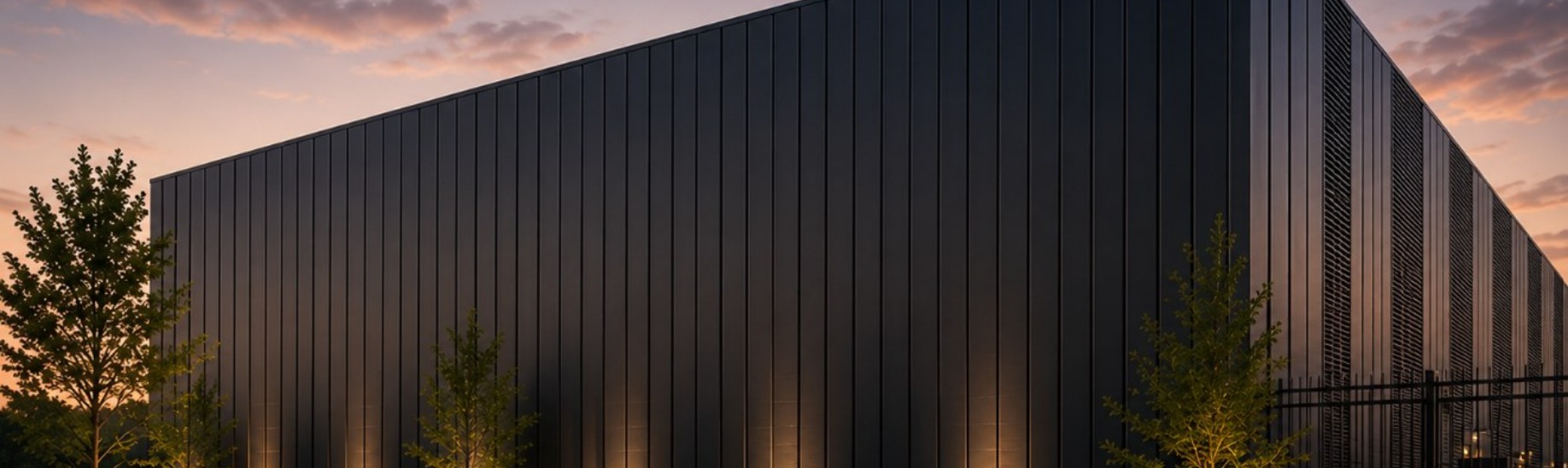
Data centers, manufacturing plants, and cold storage facilities wear more compatible metal panel than almost any building type — and most of it is vertical. The same rib-mounted collector system that installs on ribbed metal roofs also installs on compatible insulated metal panel facades, turning blank south- and west-facing walls into generating envelope. Uniform matte black, no racking, no visual compromise.
Facade area that rack-mounted systems cannot touch becomes usable generating capacity, engineered per project to the panel system and wind exposure.
Every visible component is uniform matte black and sits low against the panel — no rails, no ballast blocks, no glare-prone tilt frames.
For buildings that run 24/7, every kWh generated on the envelope is a kWh not bought off the grid — and arrays can scale across roof planes and facades as capacity grows.
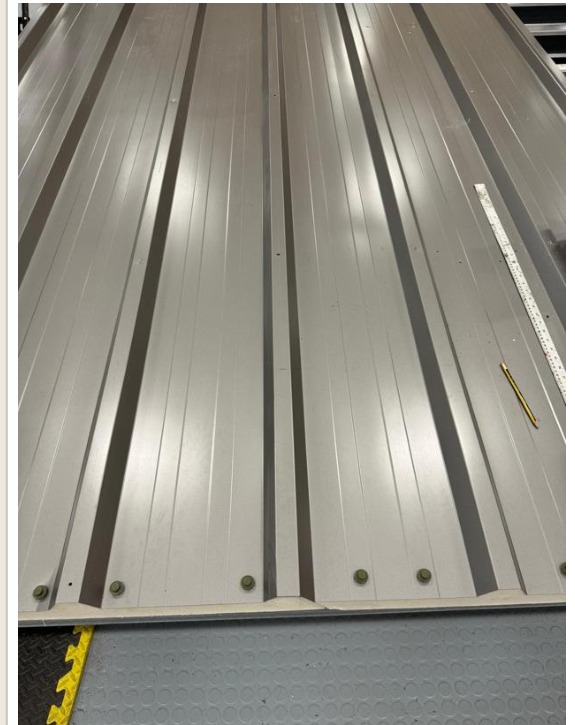
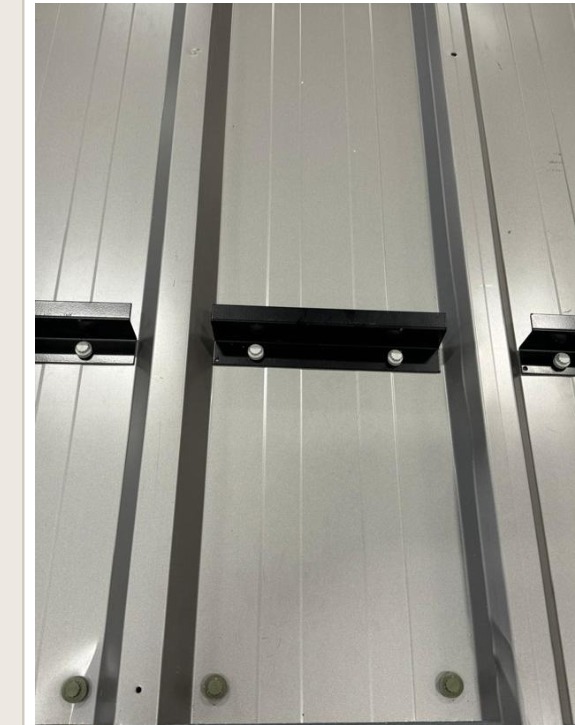
A real cladding installation sequence, documented step by step, on an insulated metal wall panel.
Start: a compatible insulated metal wall panel, unmodified.
Cladding Support Brackets fasten at the base of each collector bay, carrying the array's dead load on a vertical surface.
Inverted (Bottom) Hat rails install vertically, seated on the support brackets, with 3M VHB tape on all flanges.
Solar Collectors seat between the rails and bond to the taped flanges; wiring is routed beneath, out of sight and out of the weather.
Engineering data for early site evaluation and CD sets. We're glad to work directly with your design team on fit, structural, and code questions.
| Cell Technology | Monocrystalline, monofacial |
| Cell Efficiency | 21.6%+ |
| Collector Dimensions | 1000 × 297 mm (55W) / 1000 × 280 mm (50W) |
| Mounting System | Top Hat clamp (rib) + Inverted Hat clamp (valley or wall base) |
| Clamp Material | 26 ga galvanized steel — aluminum & stainless steel optional |
| Finish | Uniform matte black |
| Compatible Panel Types | R-panel, PBR, Multi-Rib & insulated metal panels |
| Orientation | Roof, or wall/facade engineered per project |
| Collector Bond | Continuous 3M VHB tape on all flanges |
| Certifications | ANSI/UL 61730; IEC 61215; Fire Protection Class A (UL 790/723) |
| Power Warranty | 25 years |
| Product Warranty | 10 years |
Specifications reflect current manufacturer documentation and are provided for preliminary design use. Not every roof or wall panel profile is compatible — independent fit verification and structural review should be performed for each project. Ask us for full engineering submittals and roof/wall profile compatibility review.
Send us your panel spec, elevations, or roof plan and we'll work through fit, structural, and code questions with you — before anything goes out to bid.