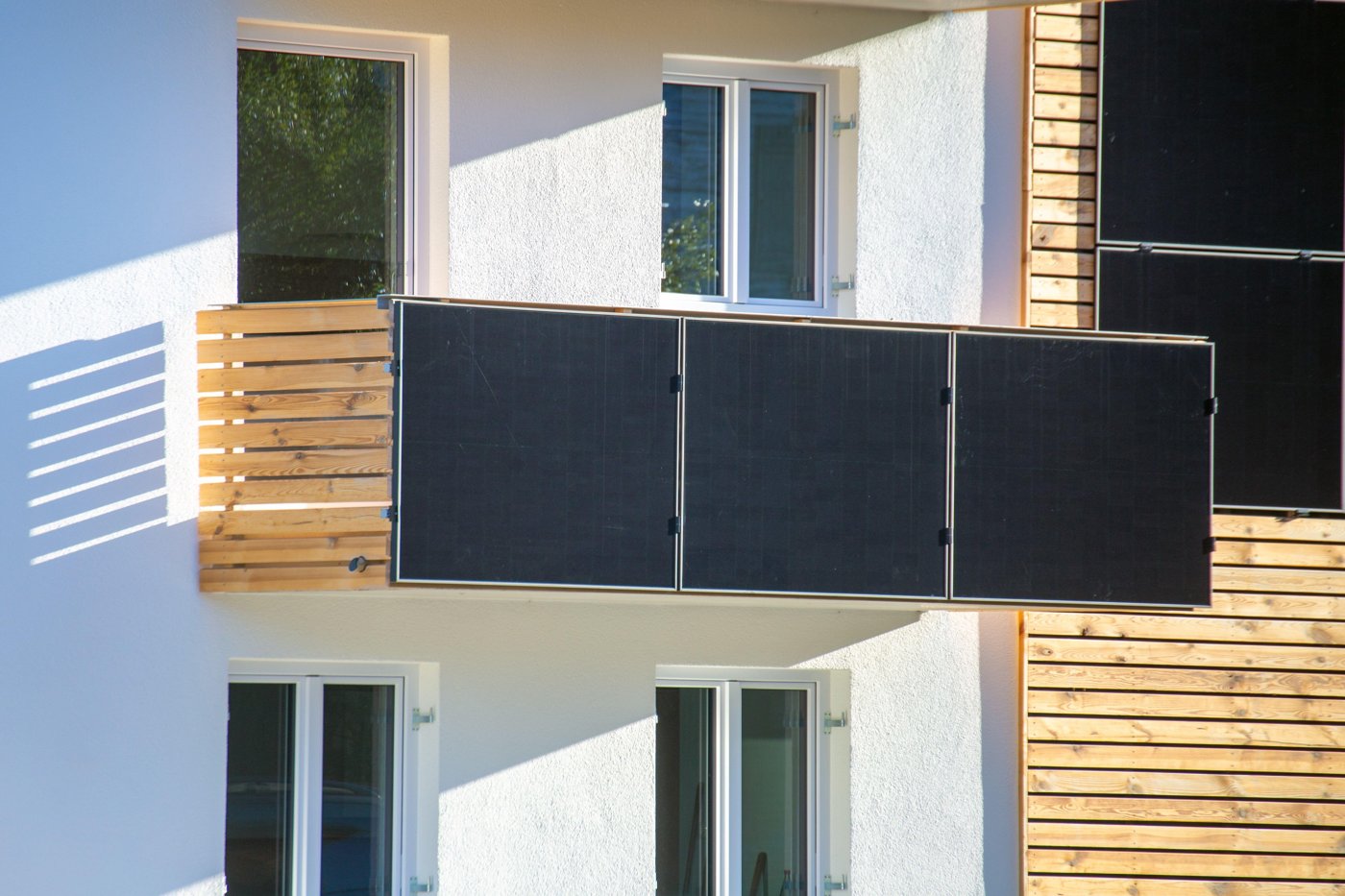
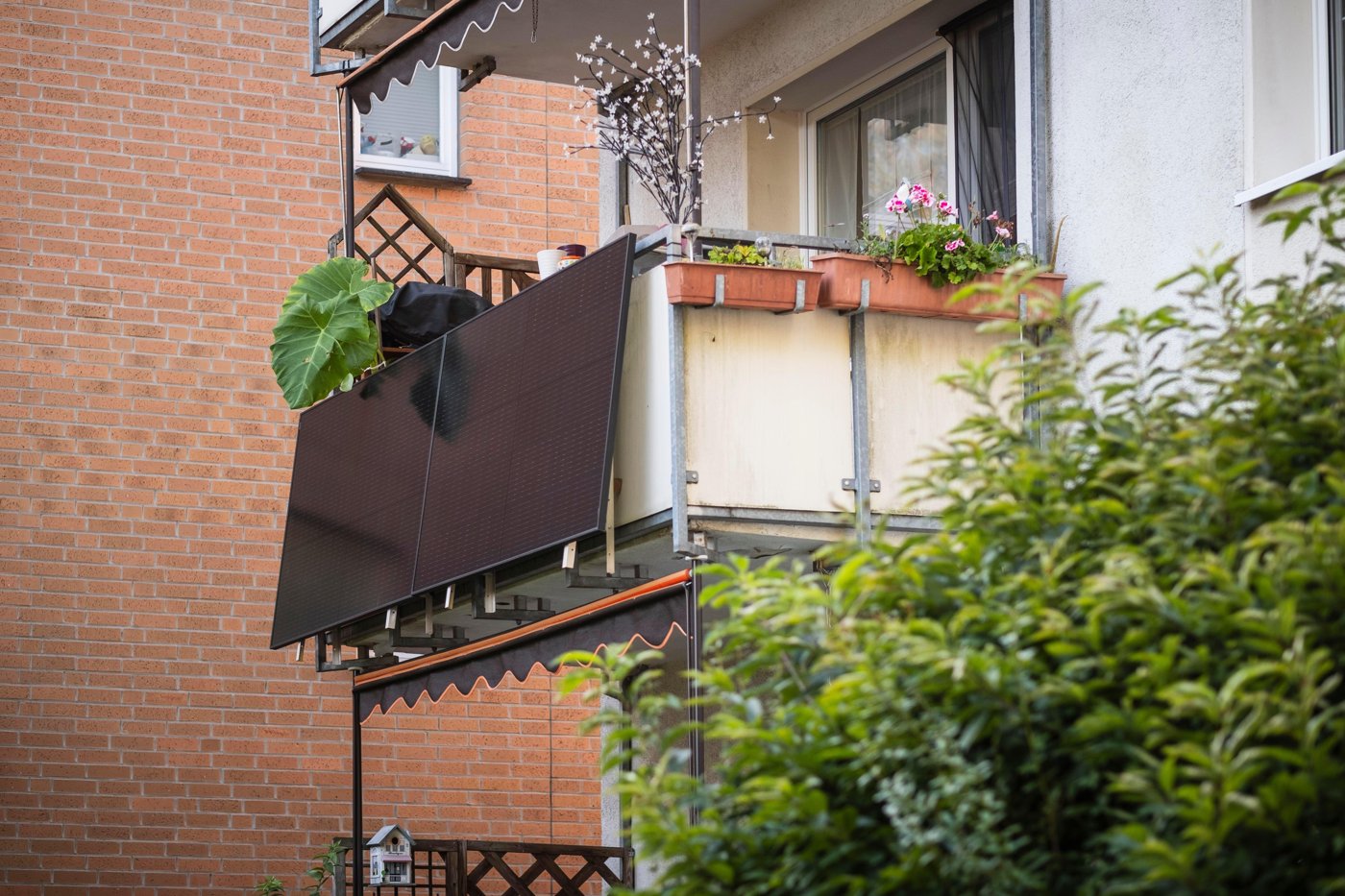
Nine states have already legalized balcony and patio solar kits that plug straight into an ordinary outlet: no permit, no interconnection agreement, no utility approval. Eleven more have bills moving. SunSocket is the certified kit built to ship everywhere these laws land, launching Q4 2026.
A SunSocket kit clamps to a railing, stands on a patio, or leans against a south wall. The microinverter lives on the panel. One cord goes to one outlet. It feeds whatever is already running in your home: the fridge, the router, the AC, so every kilowatt-hour you use as it's made is one you don't buy. This is self-consumption, not net metering: in most of these states, surplus you don't use earns no credit.
In states like Connecticut and New Jersey, the utility has zero role: no approval, no fee, no interconnection study, not even notification in New Jersey's case. Rules vary by state — see the table below.
A municipality can't require a permit just to place or use a qualifying device. Actual electrical work still falls under normal code and permitting.
Landlords, condo boards, and HOAs can't ban a qualifying device outright, though associations may still set reasonable rules on size and placement.
Every kit must be listed to UL 3700 or a comparable standard by a nationally recognized testing lab, and must stop exporting power the instant the grid goes down.
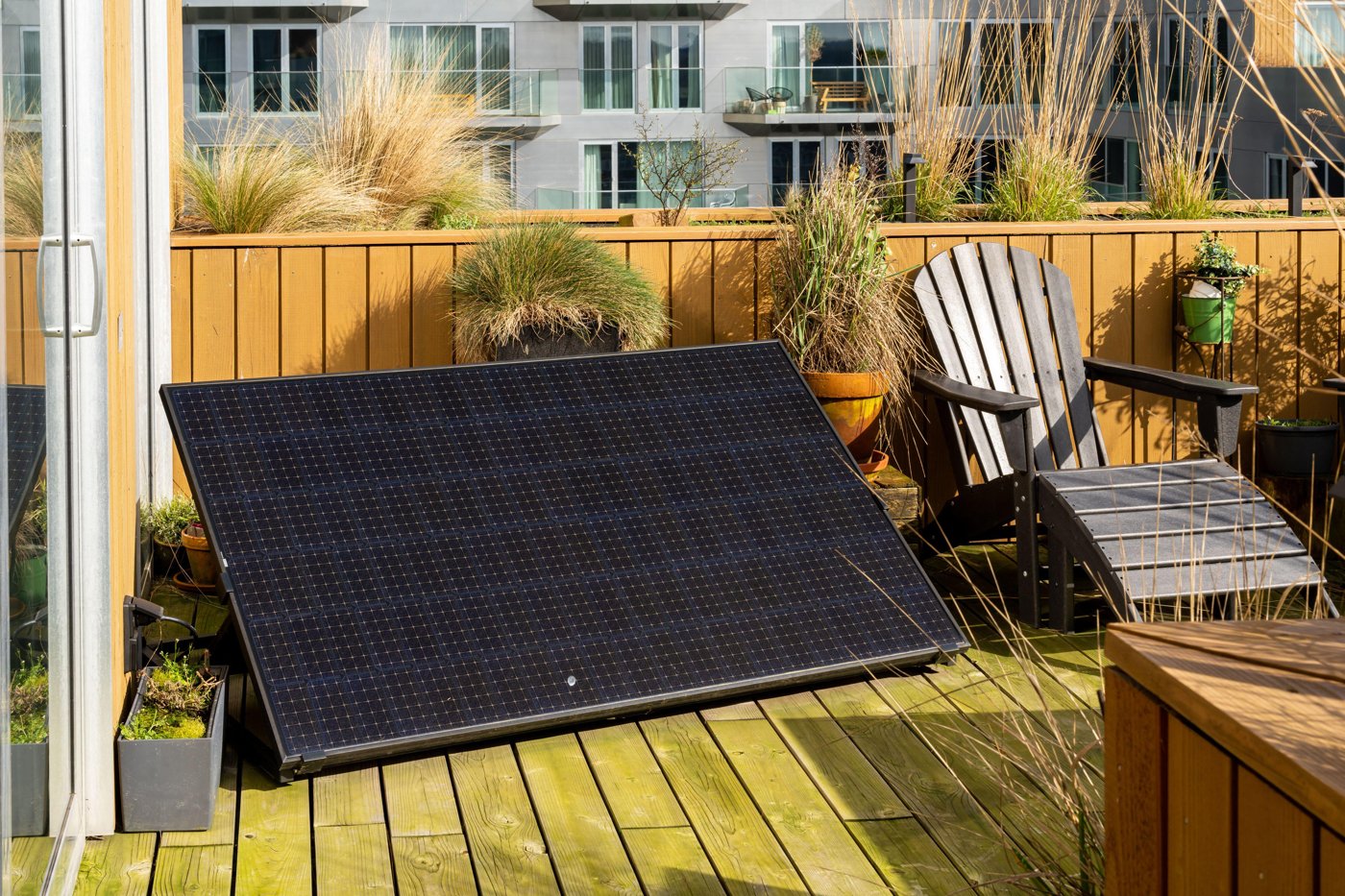
Wattage is the legal ceiling. Your wiring is the real one. Each kit is sized to a specific circuit so you know exactly where it plugs in before it arrives.
| Kit | Output | Plugs Into | Draft Price |
|---|---|---|---|
| Go 200 | 200W | Any standard 15A outlet | $349 |
| Balcony 400 | 400W | One dedicated 20A circuit | $649 |
| Home 1200 | 1,200W | Three separate 20A circuits | $1,599 |
Draft pricing shown for planning purposes only and will change before launch. Go 200 is legal self-install in all nine enacted states; Balcony 400 and Home 1200 requirements vary by state — see the table below.
The National Electrical Code limits a continuous load to 80% of the breaker rating: 360 watts on a 15-amp circuit and 480 watts on a 20-amp circuit. That's a hard electrical limit that has nothing to do with what a statute permits or what an inverter is rated for. Connecticut and New Jersey let a home run 1,200 watts; neither lets one receptacle carry it.
So the Home 1200 ships as three independent 400W branches on their own circuits, each with a labeled cord and a circuit map you fill in during setup. This is exactly the kind of panel and circuit evaluation our licensed electricians already do for every solar and Powerwall install — ask us to walk your panel before you buy.
The wattage cap, the effective date, and the one rule in each state that changes what you can buy. Laws are new and still being implemented — verify with your state utility commission before installing anything.
| State | Cap | Effective | What Changes What You Can Buy |
|---|---|---|---|
| Utah | 1,200W | May 7, 2025 | First in the nation; the template the others copied. |
| Vermont | 1,200W | Jul 1, 2026 | Requires certification of the complete system, not just the inverter. |
| Maryland | 1,200W | 2026 | Devices ≤391W skip UL certification and code-modification rules entirely. |
| Maine | 1,200W | Jul 2026 | Self-install up to 420W; a licensed electrician above that. |
| Connecticut | 1,200W | Oct 1, 2026 | No utility approval, no interconnection study, no fees. |
| Virginia | 1,200W | Jan 1, 2027 | Only state allowing up to three separate systems per meter. |
| Colorado | 1,920W | Jan 1, 2027 | Highest cap in the country; self-install tier up to 395W. |
| New Hampshire | 1,200W | 2026–27 | Effective date still being confirmed with the state PUC. |
| New Jersey | 1,200W | Mar 1, 2027 | Most permissive law: zero utility role, no town permit required. |
Eleven more states have laws in progress, from bills on a governor's desk to ones just introduced — see where laws are coming below.
Eleven more states have live movement on plug-in solar. Two bills have already cleared their legislature and are sitting on a governor's desk; nine more have been introduced and are still working through committee.
Passed the Assembly 73–0 on August 25, 2026, and the Senate concurred the next day. Governor Newsom has until September 30, 2026 to sign or veto; if he does neither, it becomes law anyway. Would take effect January 1, 2027.
Passed both chambers 59–1 in late May 2026 and has been on the Governor's desk since. Would take effect 90 days after signature. Requires certification of the complete system, not just the microinverter.
Bills introduced and moving through committee, nothing enacted yet:
SunSocket is pre-launch and ships nationwide in Q4 2026, nothing is for sale yet in any state. But the Home 1200 will need three dedicated 20A circuits and the Balcony 400 needs one. If you're planning ahead, we'll walk your panel and wiring with you now, so you're ready the day it ships.
SunSocket is pre-launch. No product is offered for sale in any state at this time, and prices shown above are draft figures for planning purposes only and will change.
State law summaries on this page are research, not legal advice, and they go stale quickly. Wattage caps, effective dates, certification requirements, and tenant-notice periods are all still being implemented, and published sources disagree on several effective dates. Before installing any plug-in solar device, confirm the current statute and its operative date with your state utility commission, along with your local building and fire code, your lease or association rules, the rating and condition of the circuit you intend to use, and the manufacturer's instructions.
Savings figures are estimates based on average residential rates and typical insolation. Actual results vary with orientation, shading, and household consumption. In most of these states, plug-in devices are excluded from net metering and exported surplus is not credited. The federal residential solar tax credit expired December 31, 2025.
New Jersey statute: S2368 / A4836, P.L.2026, c.82. SunSocket is the U.S. sister brand of Enchufasol.